Compound Numbers in Numerology: Cheiro’s 10–52 Chart
A compound number is the two-digit total your name reaches before you reduce it to a single digit. If your letters add to 23, then 23 is your compound number and 5 is your single number. Chaldean numerology reads both. Most readings only tell you the 5.
That missing layer is the whole point of the system. Cheiro, who set down the standard list in 1926, put it bluntly: the single number is what a person appears to be to others. The compound number is the hidden influence working behind it.
The two layers, and which one people actually miss
Two names can both reduce to 5. One reaches it through 14, the other through 23. Same single digit, very different reading — 14 carries movement and risk, 23 carries protection from people in authority.
Reduce too early and that distinction disappears. This is why a Chaldean reading is written as 23/5 rather than just 5: compound first, root second.
Cheiro also read compounds per name part before combining them. His own worked example splits JOHN (18) and SMITH (17), then adds the roots 9 + 8 to reach 17, single 8. So one person can carry three compounds — one for the first name, one for the surname, one for the whole. Modern calculators usually show only the last.
Why the list stops at 52
Compound meanings run from 10 to 52 and no further. The traditional reasoning: after the root 9, the compound 45 is reached, the mystical 7 is added to make 52, and 52 stands for the 52 weeks of the year. Multiply 52 by 7 and you get 364 — the ancient count of days, with the 365th kept as a sacred festival day.
Whether that logic persuades you or not, it is the stated reason the chart ends where it does, and it explains why no traditional source assigns a meaning to 53 or 60.
The complete compound number chart (10–52)
| No. | Symbol / name | Traditional reading |
|---|---|---|
| 10 | Wheel of Fortune | Honour, faith, self-confidence; rise and fall; plans tend to get carried out |
| 11 | Clenched Hand, Lion Muzzled | Warning of hidden dangers, trials and treachery from others |
| 12 | The Sacrifice, The Victim | Anxiety of mind; being used for the plans of others |
| 13 | Skeleton with a scythe | Upheaval and change of place; power that destroys if misused — not simply unlucky |
| 14 | — | Movement, combinations, risk from natural forces; good for money and speculation, with danger attached |
| 15 | — | Magic, mystery, eloquence, magnetism; strong for obtaining money and favours |
| 16 | Tower struck by lightning | Accidents, sudden fatality, defeat of plans; a warning to prepare in advance |
| 17 | Eight-pointed Star of Venus, Star of the Magi | Peace and love; the “number of immortality” — the name outlives the person |
| 18 | Rayed moon, wolf and dog | Materialism against the spiritual; quarrels, upheaval, treachery, danger from the elements |
| 19 | The Sun, Prince of Heaven | Happiness, success, esteem and honour |
| 20 | The Awakening, The Judgement | A call to act for a cause; not a material number; delays and hindrances |
| 21 | The Universe, Crown of the Magi | Advancement, honours, victory after long testing |
| 22 | Good Man blinded by folly | Illusion, delusion, false judgment through the influence of others |
| 23 | Royal Star of the Lion | Success, help from superiors, protection from those in high places |
| 24 | — | Assistance from people of rank; gain through love and affection |
| 25 | — | Strength earned through experience; success after earlier strife |
| 26 | — | Grave warning: ruin through partnerships, bad speculation and poor advice |
| 27 | The Sceptre | Authority, command, reward from productive intellect |
| 28 | — | Great promise repeatedly lost; loss through trusting others; starting over |
| 29 | — | Uncertainty, unreliable friends, deception and grief |
| 30 | — | Retrospection and mental superiority; neither fortunate nor unfortunate |
| 31 | — | As 30, but more isolated and self-contained; weak materially |
| 32 | — | A “command” number like 14 and 23; combinations of people or nations; fortunate if you hold your own judgment |
| 33 | — | No potency of its own — reads as 24 |
| 34 | — | Reads as 25 |
| 35 | — | Reads as 26 |
| 36 | — | Reads as 27 |
| 37 | — | Its own potency: fortunate friendships and partnerships |
| 38 | — | Reads as 29 |
| 39 | — | Reads as 30 |
| 40 | — | Reads as 31 |
| 41 | — | Reads as 32 |
| 42 | — | Reads as 24 |
| 43 | — | Unfortunate: revolution, strife, failure, obstruction |
| 44 | — | Reads as 26 |
| 45 | — | Reads as 27 |
| 46 | — | Reads as 37 |
| 47 | — | Reads as 29 |
| 48 | — | Reads as 30 |
| 49 | — | Reads as 31 |
| 50 | — | Reads as 32 |
| 51 | — | The warrior: sudden advancement, strong for leaders; also enemies and danger |
| 52 | — | Reads as 43 |
To see your own total before it reduces, run the name through the name numerology calculator and read the two-digit figure, not just the final digit.
The repeat rule almost every site skips
Look again at 33, 34, 35, 36, 38–42, 44–50 and 52. These are not separate meanings. Cheiro states directly that they have no independent potency and take the meaning of an earlier compound in the same series.
That matters practically. If your name totals 44 and a site gives you a glowing standalone description of 44, that description is invented. The traditional reading of 44 is the reading of 26 — a caution about partnerships.
Twenty-one of the forty-three compounds are repeats. Only twenty-two carry meanings of their own.
Where the tradition and modern numerology openly disagree
This is worth knowing before you trust any compound reading you find online.
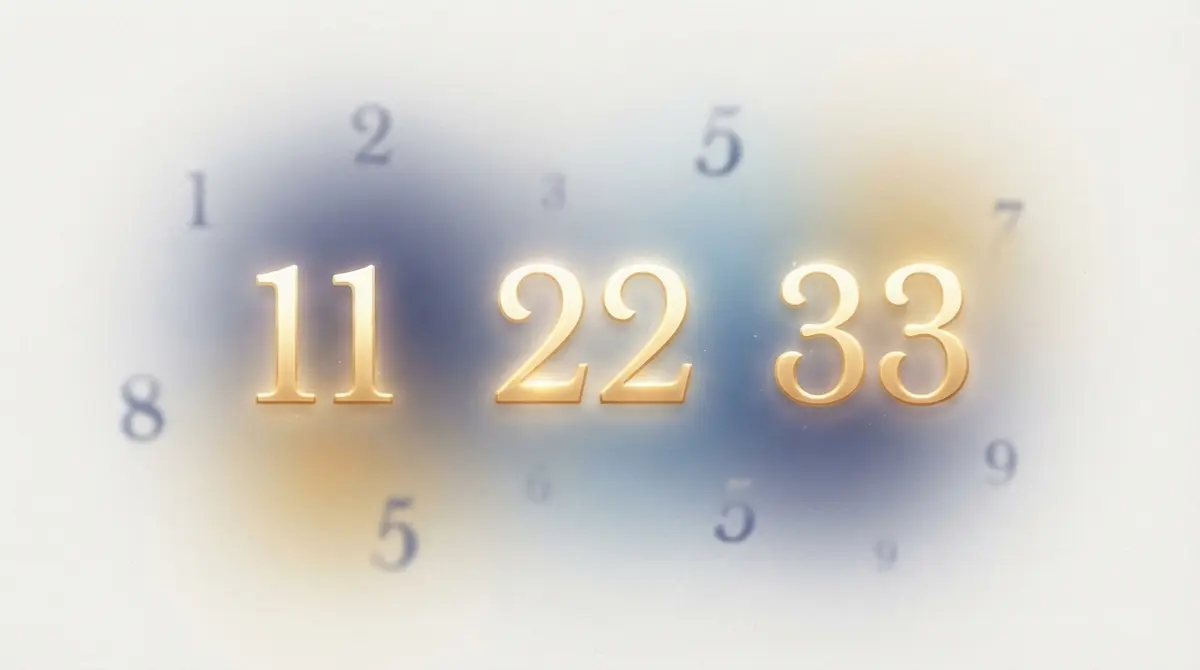
In the original chart, 11 is a warning — hidden danger and treachery. 22 is a warning — a good person living in a fool’s paradise. 33 has no potency at all and simply reads as 24.
Modern numerology treats all three as elevated master numbers with heightened potential. Both readings are in circulation, and sites rarely tell you they are quoting different traditions. If you want the modern interpretation, we cover it separately in master numbers 11, 22 and 33. If you are working in the Chaldean line specifically, the older reading is the one Cheiro wrote.
Neither is “wrong.” They are different schools. Knowing which one you are reading is what stops a confusing result.
What happens when a name totals more than 52
Add the two digits and see what you land on. Some totals produce a fresh compound, others produce only a single digit:
- 53 → 8, no compound
- 54 → 9, no compound
- 55 → 10, compound 10
- 56 → 11, compound 11
- 58 → 13, compound 13
- 60 → 6, no compound
- 61 → 7, no compound
Traditionally, a name that reduces straight to a single digit with no compound left is read as a sign that most karmic debt has already been settled. That reading is said to apply only to the name given at birth — not to a spelling you chose yourself later.
Compounds practitioners avoid on a company name
Brand naming is where compound numbers get used most seriously, because a signboard total is fixed for years.
The compounds traditionally favoured for trade are 19, 21, 23, 24, 27, 32 and 37 — advancement, protection, authority, and sound partnerships. 51 is treated as powerful but combative, suited to leadership-heavy ventures rather than service brands.
The ones most often avoided are 18, 26, 43 and 52. Note that 26 and 43 both concern collapse through partners, speculation and bad counsel — the exact risks a new company carries. A name reducing to a friendly single digit can still sit on one of these compounds, which is why the two-digit total is checked separately when you test a brand in the business name numerology calculator.
Two names can reduce to the same digit and sit on opposite compounds. That is usually the tiebreaker.
Reading a compound in a child’s name
Because first names and surnames each carry their own compound, a child’s given name can land on a favourable compound while the full name lands elsewhere, or the reverse.
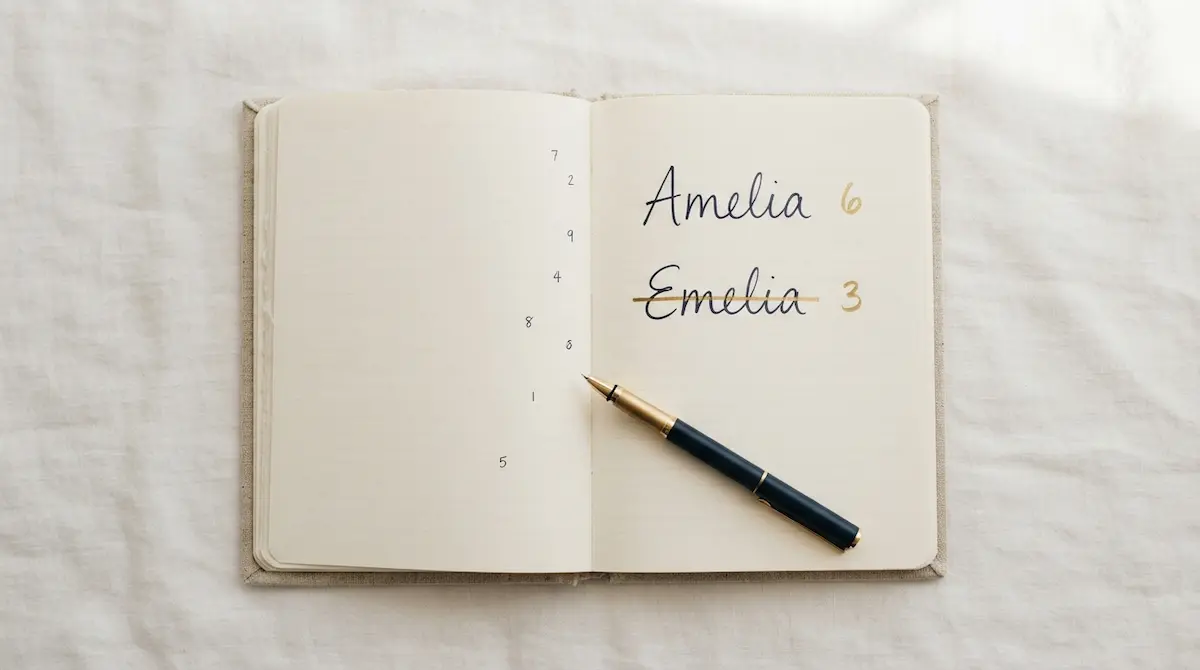
Parents comparing spellings usually check the given name’s compound first, since that is the part used daily, then the full-name total. A single added letter moves the total by its letter value, so a shortlist often shifts across several compounds. Testing both spellings in the baby name numerology calculator shows the totals side by side before anything is registered.
What compound numbers cannot tell you
These meanings come from a 1926 book by an Irish palmist and numerologist, written for readers who already accepted number symbolism. They are a tradition with a documented author, not a tested claim.
Compound numbers do not forecast events, and a warning compound is not a prediction of loss. Their genuine use is precision: they stop you from reading every 5 the same way, and they explain why two people with identical name numbers report very different experiences of them.
Read the compound for texture, the root for the general tone, and keep your own judgement above both.
Frequently asked questions
What is a compound number in numerology?
It is the two-digit total of your name’s letter values before that total is reduced to a single digit. A name adding to 23 has the compound number 23 and the single number 5, and Chaldean numerology reads both.
How do I find my compound number?
Add the value of every letter in your name and stop at the two-digit total. Do not reduce it. If the total is above 52, add its digits once and check whether the result is itself a compound between 10 and 52.
Why do compound numbers only go up to 52?
Traditionally because 45 plus the mystical 7 reaches 52, and 52 stands for the weeks in a year. Beyond 52 the total is added down until it reaches a single digit or a compound already listed in the chart.
Which compound numbers are considered the most fortunate?
19, 21, 23, 24 and 27 are the ones traditional sources treat most favourably, covering success, honour, protection, help from others and command. 17 and 37 are also read positively.
Which compound numbers carry warnings?
16, 18, 26, 28, 29, 43 and 52 are the strongest cautions in the traditional list, mostly concerning sudden reversals, betrayal by associates and failed ventures. 13 is a number of upheaval rather than plain misfortune.
Is compound number 33 a master number?
Not in the original Chaldean chart. Cheiro states that 33 has no potency of its own and takes the meaning of 24. The master-number reading of 33 comes from modern Western numerology, which is a separate tradition.
Do compound numbers change if I change my name’s spelling?
Yes. Every letter carries a value, so adding or removing one shifts the total and can move you onto an entirely different compound — often one with an unrelated meaning even when the single digit stays the same.